


The criminal justice system in the United States is faulty and open to reformative measures. The Prison Industrial Complex is a framework for understanding racial discrimination and labor exploitation that became prevalent during the post-segregation era. For example, in many private prisons, those who are incarcerated work for less than a dollar per hour; all of the money they make goes directly to their commissary, which becomes unavailable to them once they leave the institution. The system focuses more on punitive measures rather than rehabilitation, which leads to a large rate of recidivism among prior offenders. Within this project, we are going to investigate what the most effective methods of reforming the criminal justice system are based on systemic issues encompassing humanitarian needs and how these may be implemented in a way that solves deeply rooted issues, creating new barriers for previous offenders. We consider examples from European countries that utilize more restorative criminal procedures to inform our project. This can be used across disciplines by integrating the public health of citizens as well as knowledge of how the system was built and meant to function. We will analyze the data from various sources to ensure the most relevant and factual information. These sources consist of academic articles and proposed reform programs, such as the sentencing reform project, prisonpolicy.org, and the justiceeducationproject.org.
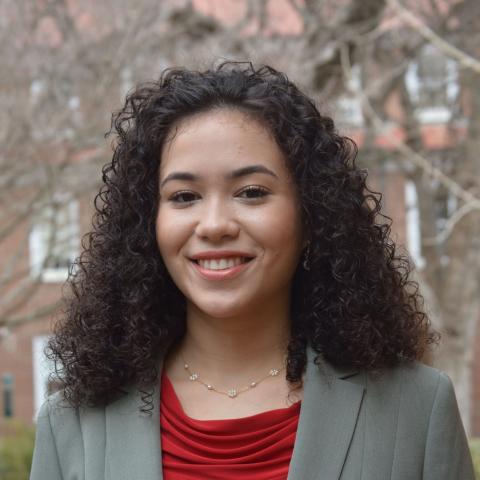
Stephanie Duran-Mendoza is a senior at Salem College and is majoring in Political Science. She completed her Associate of Arts Degree at Forsyth Tech in 2024. She enjoys writing and researching and has had the opportunity to further this practice throughout her independent study on the Role of Immigration Policies on Women of Color’s Reproductive Health. Past Salem, she hopes to attend law school and eventually become an immigration attorney.
Sarah Limbach is a double major in Sociology with a Concentration in Criminology and Public Health. Post graduation, she plans to obtain a Master's in Public Health abroad, followed by a return to the United States to begin law school. She plans to be a prosecutor who focuses on rehabilitative practices.
Fenix Simecka is in the process of obtaining a bachelor of arts degree in Sociology with a concentration in Criminology. She is currently completing an internship with the Winston-Salem Police Department, and is on the board of the campus club Students for Reproductive Freedom. Fenix is interested in continuing within the field of law enforcement in some aspect after graduation.
Scarlett Urbaez is a double major at Salem College pursuing Public Health & Health Advocacy and Humanitarian Systems, with a minor in Environmental Health. Post-graduation, she plans to attend UNCG to earn her MPH in Community Health Education. Her goal is to become a Certified Health Education Specialist and pursue public health-centered philanthropy.